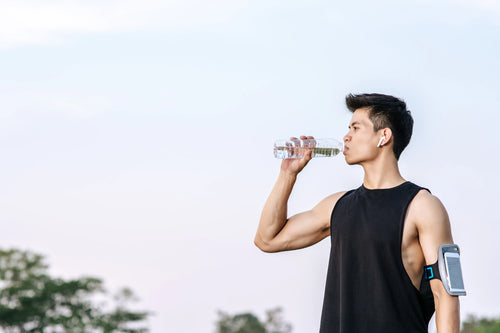
When Water's Not Enough: Why Electrolytes Are Necessary for Hydration
Hydration Is More Than Just Drinking Water
For most people, hydration is synonymous with drinking water. While water is undeniably essential for life, effective hydration involves more than simply replacing lost fluids.When we sweat, exercise, or spend extended time in hot environments, our bodies lose both water and electrolytes. Electrolytes are minerals that carry an electric charge and play essential roles in maintaining fluid balance, supporting nerve function, and regulating muscle contractions.¹ This means that effective hydration requires replacing both fluids and the electrolytes lost through sweat. Without replenishing these minerals, the body may struggle to absorb and retain the fluids efficiently.²
Understanding the difference between electrolyte drinks vs water can therefore help anyone seeking to stay properly hydrated, particularly those with active lifestyles.
1. The Truth About Water: Why Plain Water Isn’t Always Enough
Water is the foundation of hydration, but in many situations, water alone may not fully restore the body’s fluid balance.When the body sweats, it loses electrolytes such as sodium, potassium, and chloride alongside water. Among these, sodium is typically lost in the greatest amount.³ If these electrolytes are not replaced, fluid balance can become disrupted.
Drinking large amounts of plain water without replacing lost electrolytes may dilute sodium levels in the bloodstream, a condition known as exercise-associated hyponatraemia.⁴ Although relatively uncommon, it highlights the importance of maintaining electrolyte balance during prolonged sweating or intense physical activity.
Another key factor is fluid absorption. Research shows that beverages containing electrolytes—particularly sodium—can enhance the body’s ability to retain fluids compared with plain water.⁵
This means that when comparing electrolyte drinks vs water, beverages containing electrolytes often support more effective rehydration, especially after exercise, heavy sweating, or long periods of activity.
2. How Electrolytes Help Hydration
To understand how electrolytes help hydration, it is useful to look at the roles they play inside our body.Maintaining Fluid Balance
Electrolytes regulate the movement of water between cells, tissues, and the bloodstream. They help control how much fluid the body retains and how the fluid is distributed throughout the body.¹
Without sufficient electrolytes, consumed fluids may pass through the body more quickly rather than being effectively retained.
Supporting Rapid Fluid Absorption
Electrolytes also play an important role in intestinal fluid absorption, facilitating the transport of glucose and water across the intestinal wall. This allows the body to absorb fluids more efficiently.⁶
This mechanism is also the scientific basis behind oral rehydration solutions and many modern hydration beverages used specifically for rapid replacement of lost fluids.
Replacing Minerals Lost Through Sweat
Sweat contains several electrolytes, including sodium, potassium, calcium, and magnesium. However, sodium losses are typically the highest, making sodium replacement particularly important during rehydration.³
Replenishing these minerals helps restore electrolyte balance, which in turn supports muscle function, nerve signalling, and overall hydration.
3. Why Sodium Plays a Key Role in Rehydration
When discussing sodium for rehydration, it is important to recognise the role sodium plays in maintaining hydration balance.Sodium helps the body retain water by regulating osmotic balance between fluids inside and outside cells.⁷ This means that beverages containing sodium can help the body to retain consumed fluids more effectively.
For athletes, outdoor workers, or individuals exercising in hot conditions, replacing sodium lost through sweat can be particularly important for restoring hydration levels.
This being said, the average Singaporean diet tends to skew excessively high in sodium,⁸ which means hydration drinks with added sodium might not always be the most optimal option.
Hydrate Smarter with Cellular Hydration
This is where Cellular Hydration™ can fit in.Designed for people with active lifestyles, Cellular Hydration™ delivers a carefully balanced electrolyte formula in a convenient hydration shot format, making it easy to support day-to-day hydration.
Additionally, thanks to its sodium-free formula, Cellular Hydration™ is able to supplement the electrolytes that need replenishing while avoiding excess sodium intake.
By providing key electrolytes that help the body absorb and retain fluids efficiently, Cellular Hydration™ offers a practical solution for those looking to hydrate smarter, not just in greater quantity.
Experience the difference for yourself—get your Cellular Hydration™ shots at the official online store.
Frequently Asked Questions
1. Are electrolyte drinks better than water for hydration?Water is essential for hydration, but electrolyte drinks can be more effective after intense exercise or heavy sweating. This is because they help replace electrolytes lost through sweat and can improve fluid absorption.
2. How do electrolytes help hydration?
Electrolytes regulate fluid balance in the body, support the absorption of water in the intestines, and replace minerals lost through sweat. Together, these functions help maintain effective hydration.
3. Why is sodium important for rehydration?
Sodium helps the body retain fluids, regulates fluid distribution between cells, and supports rapid fluid absorption in the digestive system. However, too much sodium can lead to unwanted effects, which means it should be added to your diet in moderation.
References
1. Maughan, R. J., & Shirreffs, S. M. (2010). Development of hydration strategies to optimise performance for athletes in high-intensity sports and in sports with repeated intense efforts. Scandinavian Journal of Medicine & Science in Sports, 20(S2), 59–69. https://doi.org/10.1111/j.1600-0838.2010.01191.x2. Popkin, B. M., D’Anci, K. E., & Rosenberg, I. H. (2010). Water, hydration, and health. Nutrition Reviews, 68(8), 439–458. https://doi.org/10.1111/j.1753-4887.2010.00304.x
3. Sawka, M. N., Burke, L. M., Eichner, E. R., Maughan, R. J., Montain, S. J., & Stachenfeld, N. S. (2007). American College of Sports Medicine position stand: Exercise and fluid replacement. Medicine & Science in Sports & Exercise, 39(2), 377–390. https://doi.org/10.1249/mss.0b013e31802ca597
4. Hew-Butler, T., et al. (2015). Statement of the 3rd International Exercise-Associated Hyponatremia Consensus Development Conference. Clinical Journal of Sport Medicine, 25(4), 303–320. https://doi.org/10.1097/JSM.0000000000000221
5. Maughan, R. J., & Leiper, J. B. (1995). Sodium intake and post-exercise rehydration in man. European Journal of Applied Physiology, 71(4), 311–319. https://doi.org/10.1007/BF00240410
6. Binder, H. J. (2010). Role of colonic short-chain fatty acid transport in diarrhea. Annual Review of Physiology, 72, 297–313. https://doi.org/10.1146/annurev-physiol-021909-135817
7. Shirreffs, S. M., & Sawka, M. N. (2011). Fluid and electrolyte needs for training, competition, and recovery. Journal of Sports Sciences, 29(S1), S39–S46. https://doi.org/10.1080/02640414.2011.614269
8. Health Promotion Board. (n.d.). Eat Less. Nutrition Hub. https://www.healthhub.sg/programmes/nutrition-hub/eat-less